
Outsourcing steelwork painting: a guide for fabricators
Many steel fabricators choose to hand their coating work to a specialist applicator. It frees up shop space and labour for fabrication, and it puts the coating in the hands of people who apply paint systems every day. Getting the best from that arrangement depends on agreeing the right things at the start.
Start with the specification
The coating system for structural steel is normally set by the project’s designer or specifier, often with input from the coating manufacturer. It will usually define the surface preparation required, the products to be used, the number of coats and the dry film thickness each coat must reach. Share the full specification with your applicator at the enquiry stage, not just the colour of the topcoat, so the price reflects the work that is actually required.
If no system has been chosen yet, explain the steel’s end use and the environment it will sit in. That gives the specifier and applicator what they need to recommend a suitable system.
Agree the surface preparation
Paint only performs as well as the surface underneath it. On structural steel, preparation is commonly by abrasive blast cleaning, which removes mill scale and rust and leaves a profile for the primer to grip. The specification will state the cleanliness grade required. Agree early who is responsible for preparation, where it will take place and how the prepared steel will be protected until the first coat is applied, because blast-cleaned steel can start to rust again quickly if it is left exposed.
Decide where the coating happens
Steel can be coated before it leaves the fabrication stage or on site once it has been erected, and many projects use a mix of the two, such as priming before delivery and applying the finish on site. Each approach has knock-on effects for handling, transport, programme and access, so make the decision with your applicator rather than leaving it until the steel is ready.
Plan for handling and touch-up
Coated steel gets lifted, stacked, transported and bolted together. Some damage at lifting points, connections and edges is normal, and it needs repairing with the same system. Agree who carries out touch-up after delivery and erection, and allow for it in the programme.
Ask for inspection records
A good applicator will check and record the work as it goes, for example measuring dry film thickness with a calibrated gauge and noting the conditions during application. Ask what records you will receive, as your client or main contractor may need them at handover.
What to send for a quote
- The coating specification, or the end use and environment if there is no specification yet
- Drawings, a steel list or an approximate surface area
- Where the steel will be when it is ready for coating
- Your programme, including delivery and erection dates
How MCP can help
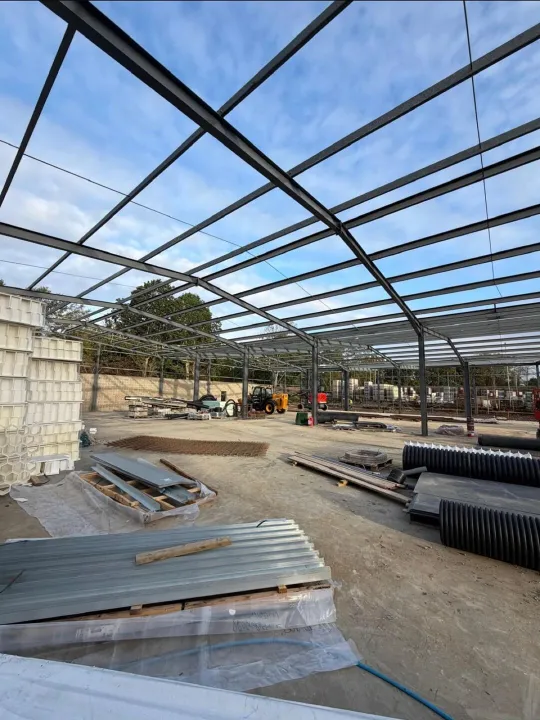
MCP Painting Group works with fabricators and steel contractors across the UK on priming, topcoating and spray application of steelwork, both off site at the fabricator’s premises and on site. Recent examples include Steel chimney coatings, Stoke, where shotblasted steel chimney sections were coated off site with two coats of primer and a polyurethane topcoat, and Industrial unit steel frame spraying, Swindon, where the steel frames of an industrial unit shell were sanded and spray coated. Read more about our steel coating services for fabricators or talk to our team about your next package.